
Talking about your cravings will help you beat them

October 25th, 2007

beating cravingsAn interesting study by Hertfordshire University recently discovered that talking about your cravings can actually reduce their power over you.

Although they used chocolate, not alcohol, the principle is exactly the same. The test subjects who were encouraged to talk about their desire for chocolate subsequently ate 50% less than those who were told not to talk about it beforehand.

If you try to ignore your cravings, or suppress them and pretend they’re not happening, then you can end up drinking even more. So if you want to beat your cravings for alcohol, just acknowledge them and talk about it with someone who is supportive.

Is your drinking disrupting your work

October 16th, 2007

alcohol affecting my workWork is often the biggest source of stress in our lives, and people sometimes end up using alcohol to relax and deal with that stress.
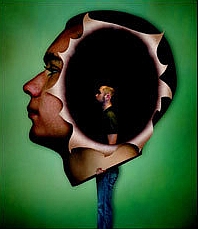
The result is often that your work performance suffers because of your hangovers. This makes it hard to concentrate, so you might well be feeling guilty.

Perhaps you’re also worried that your colleagues suspect you have a drink problem - can they smell it on your breath perhaps? So this creates even more stress.

Have you got to the stage where you feel the urge to have a little drink at lunchtime, just to calm your nerves? Or at the end of the day, are you watching the clock in the office, thinking about that first drink you can have once you leave work?

For some unfortunate people, alcohol becomes a part of their job - people in the promotions business, or staff in pubs, bars or restaurants for example. Then the two issues can be even more complicated. Business meetings at lunchtime or Friday afternoons can often involve a drink, it can be a source of bonding with your colleagues, or an important part of relationship building with a client.

So what can you do, if drinking is part of your work culture?

Is there any way your job situation could be improved so it’s not so stressful? Or is there perhaps another way to deal with that stress that doesn’t make the situation worse, like drinking does?

Give us your suggestions:

Free Alcoholic Support Forum

October 9th, 2007

UPDATE - We’ve now opened the forum - please feel free to use it if you might need support with an alcohol problem.

We’re thinking about starting a free support forum for people with alcohol problems, where members can write about what’s happening to them or offer words of advice for other members.

But what we need to do first is find out how much demand there is for this - there’s plenty of people posting comments on the site, and getting support from other readers already, but a proper forum would no doubt work better for developing a real community feel.

We asked people to vote for whether they would use a forum like this or not. The poll is now closed, but here’s how they voted over a two week period:

Yes - 96% (49 votes)

No - 2% (1 vote)

Maybe - 2% (1 vote)

Has alcohol destroyed your self confidence ?

September 24th, 2007

drinking destroys self esteemHave you become dependent on alcohol to give you self confidence? Many of our clients say they have no self confidence left because of their drinking. Sometimes they feel so guilty about their behaviour, towards their families for the pain they’ve caused them, for instance.

Eventually you might lose your belief in your own abilities or worth. If you can’t socialize comfortably when you’re sober, if you don’t think you’re entertaining / clever / open enough without having a drink first, then your confidence obviously needs to recover.

When you try to cut down on your drinking, one of the things people often have difficulty with is their lack of confidence in themselves. To rebuild that self esteem again takes time. When you feel good about who you are, then you’re more confident. You need to observe yourself - notice when you are judging yourself negatively or blaming yourself for mistakes you think you’ve made.

Part of this comes down to forgiveness. We all make mistakes, we’re human after all. But forgiving yourself for pain you’ve caused loved ones can be particularly difficult. Very often we are far more forgiving of others than we are of ourselves. Mistakes or failures are just incidents, or certain things you are still learning, try not to see them as evidence of a defective personality - there’s no doubt still plenty of things that make you a valuable person.

The process of rebuilding your self confidence also requires recognizing your ability to deal with difficult feelings or difficult situations without alcohol - you don’t fall apart, it’s just difficult that’s all. If you don’t believe you can cope with life without being drunk, then you won’t.

And believing in yourself is what self confidence is all about.

Are you Drinking Too Much ?

September 16th, 2007

are you drinking too much alcohol?Everyone seems to drink alcohol in our culture. Many seem to drink to excess on occasion. But how much drinking is too much?

Many of our clients say - why can’t I be like other people? They seem to be able to drink without getting drunk all the time.

Regular drinking is not necessarily a problem - in Mediterranean cultures families will usually have wine with dinner on most days. But they just have a glass or two. Few people in those countries see any problem with drinking like that.

The truth is, it varies from person to person - there’s no absolute level of alcohol consumption at which you have a problem.

Most people know if they’re drinking too much

… even before other people tell them. Basically if the negative consequences are more than the positive ones. But there are many signs to look out for -

  • if you’re looking forward to a drink more than the other things in your life,
  • if you’re often feeling depressed or guilty - like you need to hide how much you’re drinking from others, or even having a ’secret’ drink when you can get away with it,
  • if you’ve ever noticed a pile of your empties and thought ‘wow, that’s getting big’,
  • if the following day, you can’t concentrate on what you need to, because you ‘just can’t face it today’ - (you’re too hungover),
  • if you’re finding it difficult to look people in the eye, because you think they might be judging you,
  • if you’re buying a bottle during the day, do you buy lots of groceries with it to hide the fact that you’re buying alcohol before lunchtime?
  • but one of the surest signs is this - if you’re hungover, and you start thinking ‘just one drink will take this hangover away’, then you’ve definitely got a problem.

What signs have you noticed that you’re drinking too much?

Alcoholic women suffer more brain damage than men

August 31st, 2007

alcoholic women suffer more brain damageSome unfortunate research has just been published that alcoholic women suffer more brain damage as a result of their drinking than men do.

They appear to be more vulnerable to the neurotoxic effects of alcohol withdrawal particularly. In the long term, this eventually leads to cognitive dysfunction and motor control disorders.

Male brains, by comparison, seem to be better at repairing some of that damage. But not all of it of course, just in case any men were thinking that was a carte blanche to drink more!

Improve access to talking therapies on the NHS

August 22nd, 2007

There’s a campaign being run in the UK right now to improve access to talking therapies (like counselling, psychologists etc.). At the moment, waiting lists for NHS funded help can be up to 18 months. This is just not acceptable.

The government is holding a funding review very shortly - so a group of UK charities (including the Mental Health Foundation, Mind, and the Sainsbury Centre for Mental Health) have organised an online petition asking for more funding to be made available for this area.

If you’re a UK resident then please sign it now at www.weneedtotalk.org.uk/petition.asp

Update - This petition has now been presented to the government.

Liv.52 - Liver detox herbal supplement

August 11th, 2007

herbal liver detoxLiv.52 is a herbal medicine specifically formulated to help strengthen the liver. It assists in the elimination of acetaldehyde (the toxic by-product of alcohol) - which means you don’t get so much of a hangover. It encourages regrowth of new liver cells and protects against alcohol induced liver damage.

This is one of the few herbal medicines that has actually been researched extensively, and shown to be highly effective. Look at some of the research if you don’t believe us.

Taking this medicine won’t solve all your problems with alcohol, of course not. But it might just help your liver to cope with the effects of your drinking.


BUY LIV.52 ONLINE HERE

.

If you’re interested in herbal medicine to help reduce your alcohol consumption, read this about Kudzu

Change your Lifestyle to solve your Alcohol problems

July 31st, 2007

change your lifestyle to beat addictionQuite often, people trying to beat alcoholism will need to make some changes to their lifestyle as well as their drinking habits.

Your alcohol problems are not separate from the rest of your life, they are very much connected. So you might have to ask yourself - what needs improving in the rest of my life to help me beat this addiction?

You should perhaps take a look at how you tend to unwind, how you relax. How do you cope with stress?

Is alcohol your only way of de-stressing?

How do you tend to have fun in your life - does it always involve a bar or a bottle? Maybe you need to find some new ways to have fun?

Do you get enough exercise? (Government guidelines suggest 30 minutes daily rigorous exercise as a bare minimum) It’s one of the best ways to combat stress, feel good about yourself and release some of those natural happy chemicals (like serotonin) to prevent depression.

What about your diet - do you eat healthily, with lots of fresh vegetables, fruit and whole grains? Or are you eating lots of sugar and fat? You are what you eat, nothing more, nothing less, and your brain and nervous system need plenty of essential nutrients if you’re going to keep your moods stable.

Are you getting enough opportunity to talk honestly about how you’re feeling, without being judged or ridiculed? Have you got enough supportive people in your life?

Do you have any sort of spiritual practice or beliefs? How do you remind yourself that you’re connected to the rest of the world, that you’re not isolated?

Above all, make sure you don’t tie yourself in knots by thinking you should do all these things, but you don’t so therefore you’re useless. Making yourself feel guilty won’t help at all. Motivating yourself is the key (and often the most difficult part).

What needs to change in your life, and how is that going to happen?
Set yourself some step-by-step goals to make sure you take action.

Alcohol makes Depression even worse

June 26th, 2007

alcohol causes depressionUnfortunately, one of the biggest causes of people drinking too much alcohol is as a way of coping with depression. The unfortunate thing is, that as a solution it’s probably the worst there is, because alcohol itself causes further depression.

It directly reduces the levels of Serotonin in the brain - this is the neurotransmitter that anti-depressant drugs like Prozac (an SSRI) increase your levels of.

Only when you cut down your drinking will you be able to feel any happier. But once you’ve cut down, how do you stop the cycle beginning again? You have to deal with your depression some other way

Read this report from the Mental Health Foundation on the effects of Alcohol on Mental Health, it explains in more depth the link between alcohol and depression.

(if you don’t have Adobe Acrobat installed to read this pdf, get it from the Adobe Website)

Trying to stop drinking is stressful

June 8th, 2007

recovery is stressfulStruggling with addiction is stressful - when you’re trying to stop drinking you can end up in a cycle of battling with cravings and guilt, having to remember all those things that you’re supposed to be doing differently.

It can be exhausting, so much so that it creates its own cravings. But stress is all about your perceptions of your abilities - if you tell yourself that “I can’t do this”, then of course you’ll feel stressed about it.

If you tell yourself that, “yes this is difficult, but I think I can do it”, then you’ll feel more confident. It’s simple really, you just need to get into the habit of saying positive things like that to yourself, eventually you’ll believe them.

What you’re trying to do right now is very difficult, so recognise that you need to off-load to people, to talk it through, to schedule in some relaxation time, some treats for yourself. If you’ve got a family to think about too then this can be hard to justify: “I’ve been such a strain on them already, how can I ask them to sacrifice even more?”, or “How can I take time away from my children when I’ve already been neglecting them because of my drinking?”

The point is, you need some time to relax if you’re trying to stop drinking, because it’s an incredibly draining task. Acknowledge that, be honest about it. You can’t be strong all the time!

Low blood sugar levels cause alcohol cravings

June 3rd, 2007

low blood sugar creates alcohol cravingsOne of the things that can easily induce a craving for alcohol is low blood sugar. This can occur after a ‘rush’ of simple carbohydrates (sugar, processed wheat etc.), blood sugar levels quickly increase, then decrease again just as sharply.

It can also occur if you haven’t eaten anything for a long time - so don’t let yourself get too hungry!

The craving comes about because your body associates drinking alcohol with lots of quickly available carbohydrates, and that’s what it asks you for. So the one thing you need to do when you’re cutting down your alcohol intake, is keep your blood sugar levels fairly balanced.

You can prevent the low blood sugar, and hence the craving, by not eating so much sweet or processed food. Eat more fibre-rich whole foods, like wholemeal or granary bread, muesli or granola, fruit instead of chocolate (sorry!). And don’t forget those sugar-packed fizzy drinks, they’ve got to go too.

So next time you get a craving for alcohol, eat something instead - you’ll be amazed at how quickly that craving disappears. Just make it something healthy though, OK?

Prevent a lapse becoming a relapse

May 27th, 2007

a lapse doesn't have to be a relapseYou’re trying to stop drinking, and maybe you’ve been successful for a while. You’ve managed to control your alcohol intake to reasonable levels, or you’ve managed to stay completely sober for some time.

So then what do you do if you have a lapse? You drink again, far more than you intended to, waking the next morning feeling terrible, that you’ve let yourself down maybe?

How you view this lapse will determine how you react to it. If you see it as a sign of failure, then your self esteem will suffer, you’ll lose hope and end up believing that the changes you’re trying to make are not possible, that you’re simply an alcoholic, you just can’t help it. This sort of belief can then lead you to drink even more - so a single mistake turns into a full relapse.

Or you could look at your mistake as just another occasion where you slipped back into old routines for a while. But that needn’t be a reason for you to give up hope, just a flag to remind you that, for the moment at least, you need to be very vigilant about your behaviour.

Observe your own feelings and thoughts, be aware of when you’re in the sort of mood where you usually want a drink - and do something about it, something different. (See - Dealing with Cravings). Acknowledge that you’re feeling weak or emotional - talk to someone about how you’re feeling generally. Don’t try to struggle through it alone.

Don’t forget, the best way to handle your feelings is to express them - talk about it. That way a lapse can remain just that, something you can learn from rather than an excuse to relapse completely.

Binge drinking is alcoholism too

May 21st, 2007

binge drinkingMany people looking for help on this site do not consider themselves to be alcoholics. They are not drinking all day, every day. But they are regularly binge drinking alcohol to excess, such that they are damaging their health, their relationships and their self esteem.

It is easier to convince yourself that you haven’t got an alcohol problem if you can regularly have days where you don’t drink at all. You think you’ve got control of your drinking again, so you’re not so concerned any more.

Then it happens again - you binge, and wake up feeling awful. Maybe you carry on drinking heavily for a couple of days to deal with how guilty you feel about it all. But this type of binge drinking can have serious negative consequences which you need to do something about.

Are you an alcoholic or a binge drinker?

Take our test of alcoholism signs and symptoms.

Are you drinking to cope with boredom?

May 14th, 2007

boredom causes alcoholismMany people with an alcohol problem are drinking as a way of dealing with boredom. They’ve got nothing exciting or interesting to do, so they drink instead, and that keeps them entertained.

Watching TV for hours is boring and uninspiring, but if you have a drink then it becomes more tolerable.

So, is your life too dull? If you weren’t drinking so much, what would you be doing with your spare time instead?

If you have difficulty answering that question, then here’s the first problem you need to solve before you can move forward.